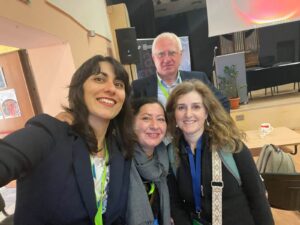
Members of the Balkan Ethnology Department took part in the sixth edition of the Cultural Seminar “The Unknown” (НЕПОЗНАТИТЕ), held in Plovdiv from 2 to 4 October 2026. This year’s edition marked ten years since the seminar was launched in 2016. It combined academic research, cultural heritage, the arts and many forms of public engagement.
A central part of the programme was the International Scientific Conference “Heritage, Communities, Territories”. It was organised by the Institute of Ethnology and Folklore Studies with Ethnographic Museum at the Bulgarian Academy of Sciences (IEFSEM–BAS) and the Association “The Unknown – Plovdiv”, with financial support from the Bulgarian National Science Fund. The conference gathered more than 90 scholars from 16 countries across 4 continents.
The department was represented by researchers and doctoral students whose papers covered a wide range of topics, including migration and belonging, communities, cultural heritage and tourism.
Assoc. Prof. Mila Maeva, PhD, delivered the plenary lecture “Unknown Adventists in Bulgaria and the Baltic States” and moderated the final discussion of the conference, setting focus on cultural heritage, identity and territorialisation.
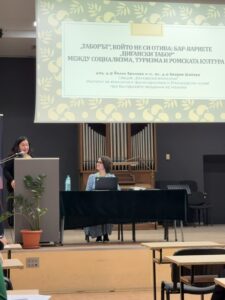
Assoc. Prof. Yelis Erolova, PhD, presented “Sacred Springs (Ayazma) in Strandzha: Traditions, Folk Medicine, and Tourism”. Her paper examined how sacred places, traditional healing practices and contemporary tourism intersect. Together with Assist. Prof. Behrin Shopova, PhD, she co-authored a second paper, “‘The Camp’ That Never Goes Away: The Gypsy Camp Variety Bar between Socialism, Tourism, and Romani Culture”.
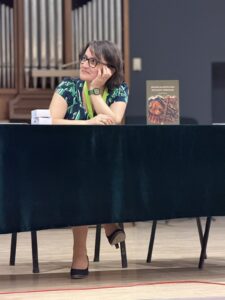
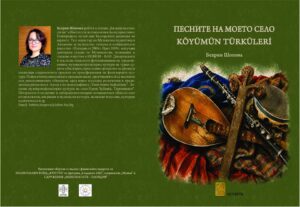
Dr Shopova also spoke on “The Biographical Narrative in ‘Mevlid-i Şerif’ and ‘Ebu’l-Hayr Mevlidi’”. Her new book, “The Songs of My Village / Köyümün Türküleri” (ПЕСНИТЕ НА МОЕТО СЕЛО / KÖYÜMÜN TÜRKÜLERİ), was presented as part of the seminar’s literary programme. The book is a bilingual Bulgarian–Turkish collection, which contains traditional songs with musical notation and audio recordings of selected examples. The songs were compiled by the author. The volume documents the local musical folklore of Gorna Hubavka, a village northwest of Omurtag in Targovishte Province, Northeastern Bulgaria.
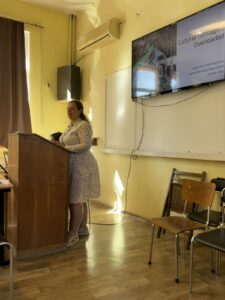
Assist. Prof. Julia Popcheva, PhD, gave the paper “Cultural Heritage… Overloaded”. She addressed the impact of intensive tourist flows on local communities and showed how overtourism can disrupt residents’ everyday lives. She also highlighted the complex relationship between heritage preservation, tourism development and the interests of local populations.
The department’s two PhD students shared their ongoing research. Rositsa Baltadzhieva’s paper, “Festive Practices and Cultural Resilience among Ukrainian Refugees in Thessaloniki”, explored how festive practices help refugees maintain cultural resilience. Polina Trifonova presented “Home and Homeland in the Context of Migrations: The Case of the Crimean Tatars in Bulgaria”. She focused on Crimea, Bulgaria and Turkey, three geographical and symbolic spaces closely tied to the community’s migration experiences, and examined how they shape perceptions of home, homeland and belonging.
The department’s participation reflected the thematic diversity of its current research. It also contributed to the conference’s wider discussion of the relationships between heritage, communities, identity, migration and territory.
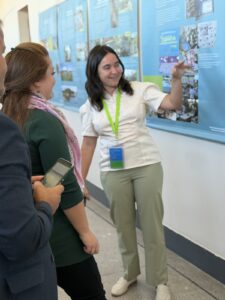
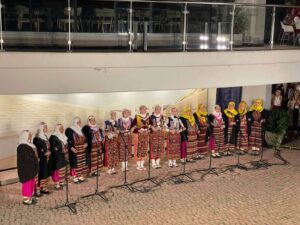
Beyond the conference, the anniversary edition of “The Unknown” offered a rich cultural programme featuring exhibitions, concerts, book presentations, film screenings, demonstrations, a traditional costume show and a virtual tour. One highlight was the photo exhibition “Moving to the Countryside” (ДА СЕ ПРЕМЕСТИШ НА СЕЛО) by Petya Dimitrova, PhD. It explores internal and international migration from cities to Bulgarian villages. The photographs document changes in the material environment, how newcomers adapt culturally and socially, and their interactions with local residents. They also show the emergence of communities with distinctive lifestyles.