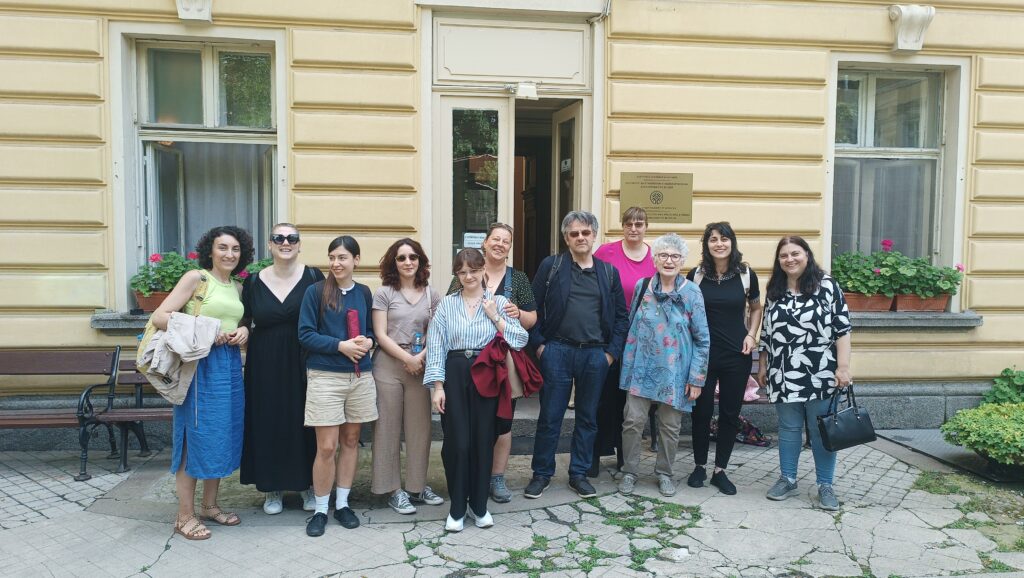
From 29 June to 2 July 2026, IEFSEM–BAS hosted “Migration and Multicultural Societies”, an intensive course for PhD students and postdoctoral researchers led by Prof. Paolo Ruspini of Roma Tre University, Italy.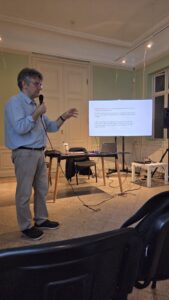
The programme combined theory with case studies and ethnographic fieldwork. It covered historical and contemporary migration flows, transnationalism, socio-cultural processes and key challenges facing multicultural societies. Particular attention went to the integration and adaptation of migrants and refugees and to relations between sending and receiving communities.
The lectures were followed by fieldwork in Sofia. Participants visited the Women’s Market (Zhenski Pazar) as an example of a multicultural urban space. They also met Silsila Mahbub, a refugee from Afghanistan, in her design studio. She spoke about her own migration, about building a new life in Bulgaria and about her work supporting other refugees. The conversation also touched on racism, discrimination and social exclusion.
Another highlight was a screening of the documentary “North of Lampedusa”. The film follows the bond that formed between a rescuer and the refugees he helped after the shipwreck of 3 October 2013, one of the deadliest tragedies in the Mediterranean. After the screening, the film’s protagonist joined the group live from Italy. He offered a personal view of issues usually discussed through statistics, policy and academic research.
Participants included PhD students and postdoctoral researchers from IEFSEM–BAS and Sofia University “St. Kliment Ohridski”, an Erasmus+ doctoral student, a representative of a non-governmental organisation and a guest photographer from Germany. The Balkan Ethnology Department was represented by Assist. Prof. Julia Popcheva, PhD, and PhD students Rositsa Baltadzhieva and Polina Trifonova. Throughout the course, participants exchanged ideas and research approaches in the lectures, discussions and field activities.
By bringing together academic analysis, field experience and personal migration stories, the course encouraged reflection on diversity, encounters with the “other” and ways of building bridges between communities and cultures. It presented multicultural interaction not only as a challenge but as an integral part of contemporary societies.
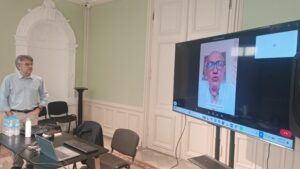
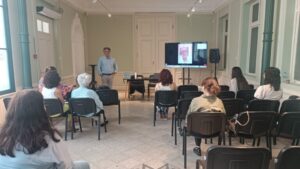
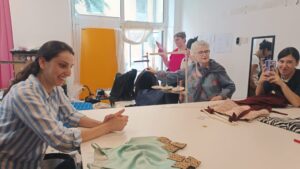
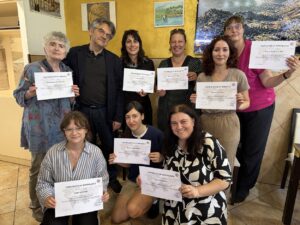
Photo credits: Betül Aydın, Polina Trifonova and Julia Popcheva